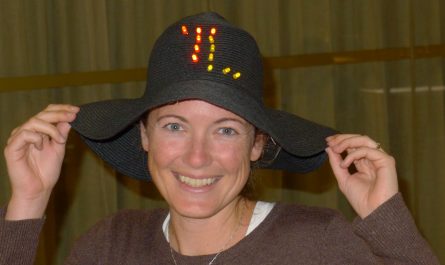
 by
by Amidst an unexceptional suburban high school, I was blessed to have two music teachers who were working jazz musicians. Their talent, humor, generosity, and demonstrable commitment to artistic excellence led my small friend cohort and me to dream of becoming members of Art Blakey’s Jazz Messengers or The Art Ensemble of Chicago. Thad Jones was the first famous musician I ever met, because he played a concert at my high school when I was thirteen. A couple years later, jazz legend Roy Haynes, also performed at school. By 11th grade we helped convince the school district to approve a daily Jazz Improvisation course. Those remarkable blessings were compounded by the fact that I lived in Wayne, New Jersey, home to a state commuter college that had one of the world’s great Jazz programs in higher education. Our proximity to New York City and the ingenuity of the program’s leadership ensured that there were ten or twelve world-class jazz concerts Sunday afternoon fifteen minutes from my house.
and then it happened…
One Sunday in the Fall of 1980, I attended one of those Jazz Room concerts at William Paterson College (now university). The music was so spectacular that it scrambled my DNA. Oddly, I found it difficult to remember who the actual performers were that day, but Internet research confirmed that it was the Frank Strozier Quartet featuring the great Harold Mabern (another legend who would later become a friend.) It may seem obvious to readers, but few mediocre white kids in 1980 had their life changed by an encounter with the Frank Strozier Quartet – although more certainly would if they had a similar level of access to musical greatness.
That night I could barely sleep and the excitement of what I experienced at the Jazz Room distracted me all day at school. As soon as the bell rang Monday, I threw my trumpet in the trunk of my 1974 chocolate brown Grand Torino Elite and made a beeline for the William Paterson campus. I parked illegally, grabbed my horn, and headed towards the music building like on a holy pilgrimage. To this day, I have no idea what I thought would happen.
Seconds after I sat in the hallway on my trumpet case, the doors to the rehearsal room swung open and a giant of a man, Chico Mendoza, pointed at me and asked, “You. Kid. Is that a trumpet?” I replied, “Yes,” and he gestured for me to come towards him. As he held the door open for me, he pointed to an empty music stand in the trumpet section and said, “Third!” I told him that I was not a student at the school, and he told me he didn’t care since he needed a trumpet player.
I played the rehearsal to the best of my ability and afterwards went to thank Mr. Mendoza for the thrill of letting me sit-in on his rehearsal. He asked, “You’ll be here next Monday, right?” and I reminded him that I didn’t go to school at William Paterson College. It was unclear if he knew I was in high school. He didn’t care. He wanted me to join the band – and so I did. (Incidentally, my father says he knew none of this story.)
So, I spent my entire senior year of high school playing in the William Paterson College Latin Jazz Band led by Chico Mendoza! I wasn’t even the best trumpet player in my high school. When Chico needed a tenor saxophone player, I recruited my high school jazz teacher, George Hicswa, to join me in the band. Years later, my private trumpet teacher and junior high band director, Dick Lukas took my advice and played in Chico’s college band as well.
Enjoying the opportunity to play in a college ensemble which I had no business doing was only the start of the gifts Chico shared. As a teacher, he was interested in me as a person and learned that I aspired to be an arranger. So, he paid me out of his own pocket to copy the music he was writing for the band.
As an adjunct faculty member, Chico would have earned dozens of dollars to teach his ensemble but felt an obligation to write original arrangements that satisfied his curricular ambitions for the course and were also tailored to the student personnel playing them. Since Latin Jazz was an emerging genre, there were not lots of musical charts accessible for educators and they certainly weren’t as hip as what Chico could write. On top of that, he was trusting a seventeen-year-old kid with copying the parts for the band AND paying him to do so. Copying music allows a copyist to get inside the head of the composer and is an authentic form of apprenticeship for aspiring arrangers.
Chico’s generosity did not end there. He came to my house to give me free arranging lessons, hired me to copy music and play in the band he organized to perform at the state mental hospital where he worked, and gave me tickets to the legendary Salsa Meets Jazz concerts he hosted at New York City’s Village Gate. The scholarship I was awarded to attend Berklee College of Music was in no small part due to playing in Chico’s band.
Chico Mendoza’s unconditional love, generosity, and recognition of my initiative is foundational to the life I’ve lived. He treated me as an adult peer and that experience building social capital has served me well for decades. I went on to enjoy glorious experiences studying music with geniuses like Frank Foster, Barry Harris, Paul Jeffrey, Lou Mucci, John Stubblefield, Larry Ridley, and Andy Jaffe.
In my mid-twenties I decided that the world did not need any more mediocre trumpet players and I stopped playing. That is not a failure of my music teachers, quite the contrary. The standard folks like Chico Mendoza set helped me realize that my talents lie elsewhere. I do not regret for one second the time I spent studying music. It was anything, but a waste. As a teacher educator, I’ve written books, spoken at prominent conferences, published thousands of articles, worked in schools all over the world, designed university programs, earned a PhD in Science and Mathematics education, started two book publishing companies, received awards, and been able to carry on the legacy of great progressive educators, like my friend Seymour Papert. Above all the legacy of Chico Mendoza extends far beyond those accomplishments.
Chico embodied the tacit skills of an exceptional educator. He loved his subject, Latin Jazz, a field he helped identify and promote. He loved his students enough to work for pennies for 46 years. He created a curriculum, assembled seminal “texts,” and developed a pedagogical approach suited to his students. He welcomed all students regardless of ability, expected much of them, and then watched as they exceeded anyone’s expectations. He understands that education is growth. You take students from where they are and help them progress. Chico was proud of his students, not just the two generations of the world’s finest jazz musicians who passed through his band, but crummy hacks like me too.
There were seven saxophone players in the recent William Paterson University Latin Jazz Ensemble led by Chico Mendoza. For the uninitiated, that is an unusually large number of saxophones for any jazz ensemble, and there were only two trumpets and two trombones – smaller sections than typical. That indicates two things: 1) Chico Mendoza was unwilling to turn eager students away from a chance to learn and perform with him; 2) He had to create musical arrangements for this specific musical aggregation.
Such dedication, devotion, and skill often go unnoticed. Universities are fueled by underpaid adjuncts, like Chico Mendoza and Harold Mabern, with expertise far exceeding those with tenured appointments. Their skills and subject area domains tend to be undervalued – everyone knows that jazz isn’t a “real” major with secure earning potential and Latin Jazz is a sub-genre of that. The strange, but wonderful trajectory of my ersatz career is a repudiation of that view. Learning to learn is what matters most and love is a better master than duty.
Latin Jazz is a prime example of the critically important esoterica that gives meaning to a university education. It is why universities exist. They are more than vocational training centers. Universities educate the heart, head, and hands. They celebrate the vastness of knowledge, talent, and wisdom. They represent the pilot light of pluralistic democracy. Yet, even in an esteemed university jazz program like William Paterson, Latin Jazz is less cool than other ensembles. Educators like Chico Mendoza tend to exist at the margins. This has always been as misguided as it is impractical. Given the explosion of Latin culture and the popularity of its music in the United States, being able to play the style of music Chico teaches, greatly expands the earning potential of instrumental musicians. The only money I ever earned as a musician was playing “Latin gigs.”
Chico Mendoza introduced me to the joy, beauty, and richness of Latin jazz. That gift led me to a lifetime of musical pleasure. I’ve seen Tito Puente and Ruben Bladés in concert. I’ve met Latin jazz pioneers, including Machito, Candido, Chico O’Farrell, Chucho Valdes, and Horacio “El Negro” Hernández Most improbably I became great friends with Eddie Palmieri and even helped out with an album of his that won the Grammy Award for Best Latin Jazz Recording. However, the greatest gift of all was the good fortune of having Chico Mendoza in my life.
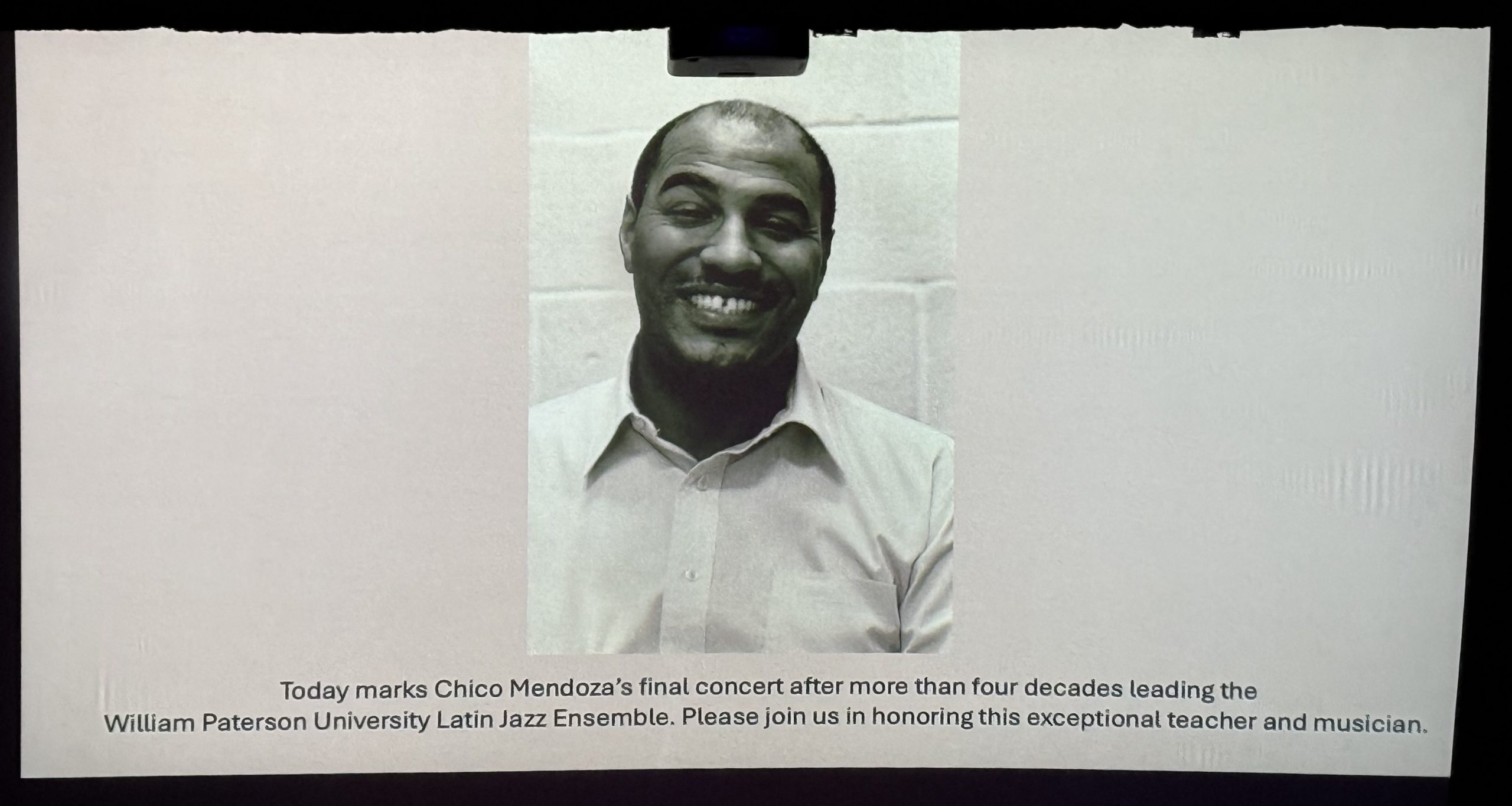
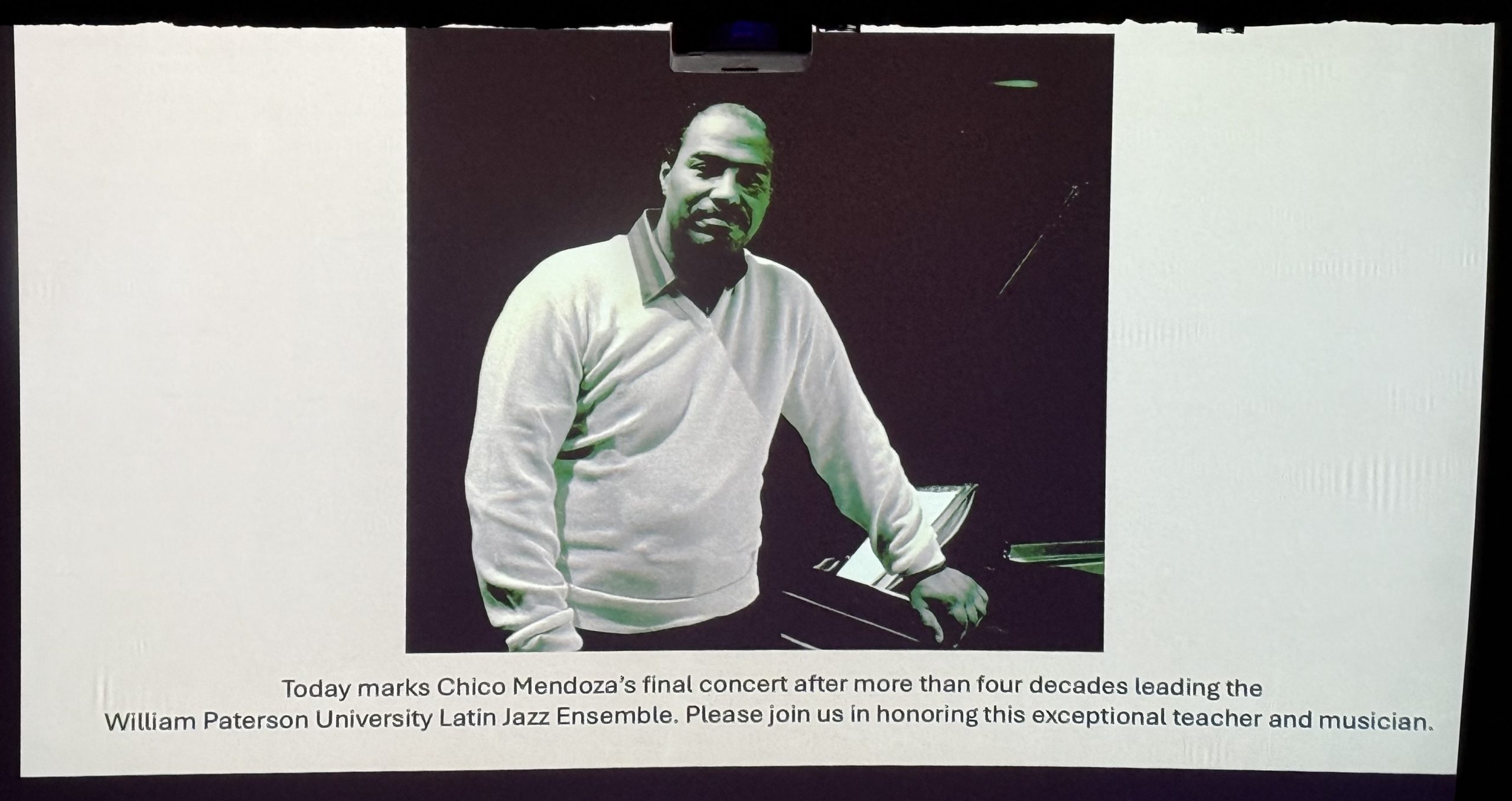
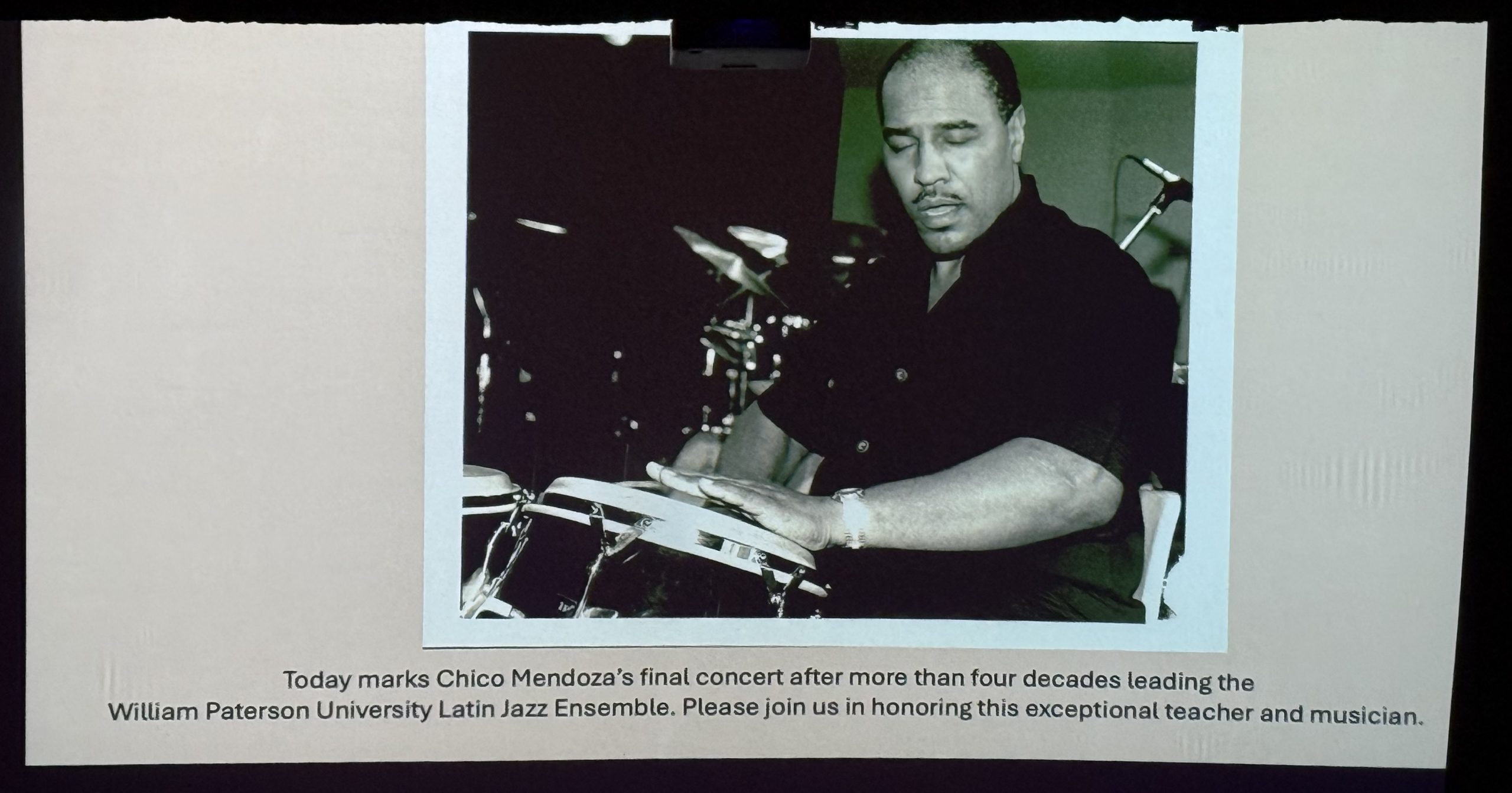
A deeply moving experience
I try to check-in with the men and women on whose shoulders I stand. Chico Mendoza is no exception. When I learned that his college band would be performing this May with the great NEA Jazz Master Paquito D’Rivera as a guest soloist, I arranged a stop in New Jersey on my way from Los Angeles to Italy so I could attend the concert. It was not until I arrived at the concert venue that I learned that this would be Chico’s final act at William Paterson. Such serendipity shook me to my core. It is impossible to fathom a world in which Chico Mendoza is not teaching kids clavé or introducing them to the magic of the guaguancó, guajira, merengue, or mambo.
In a just world, the university President, Governor of New Jersey, and the entire William Paterson jazz faculty would have been in attendance to honor Mr. Mendoza, but alas. The true recognition of his gifts and service was in the outstanding performance by his ensemble and the admiration displayed by students shooting cellphone video of Chico playing one last piano solo for them. They will remember that long after the thrill of performing with the spectacular legend Paquito D’Rivera fades.
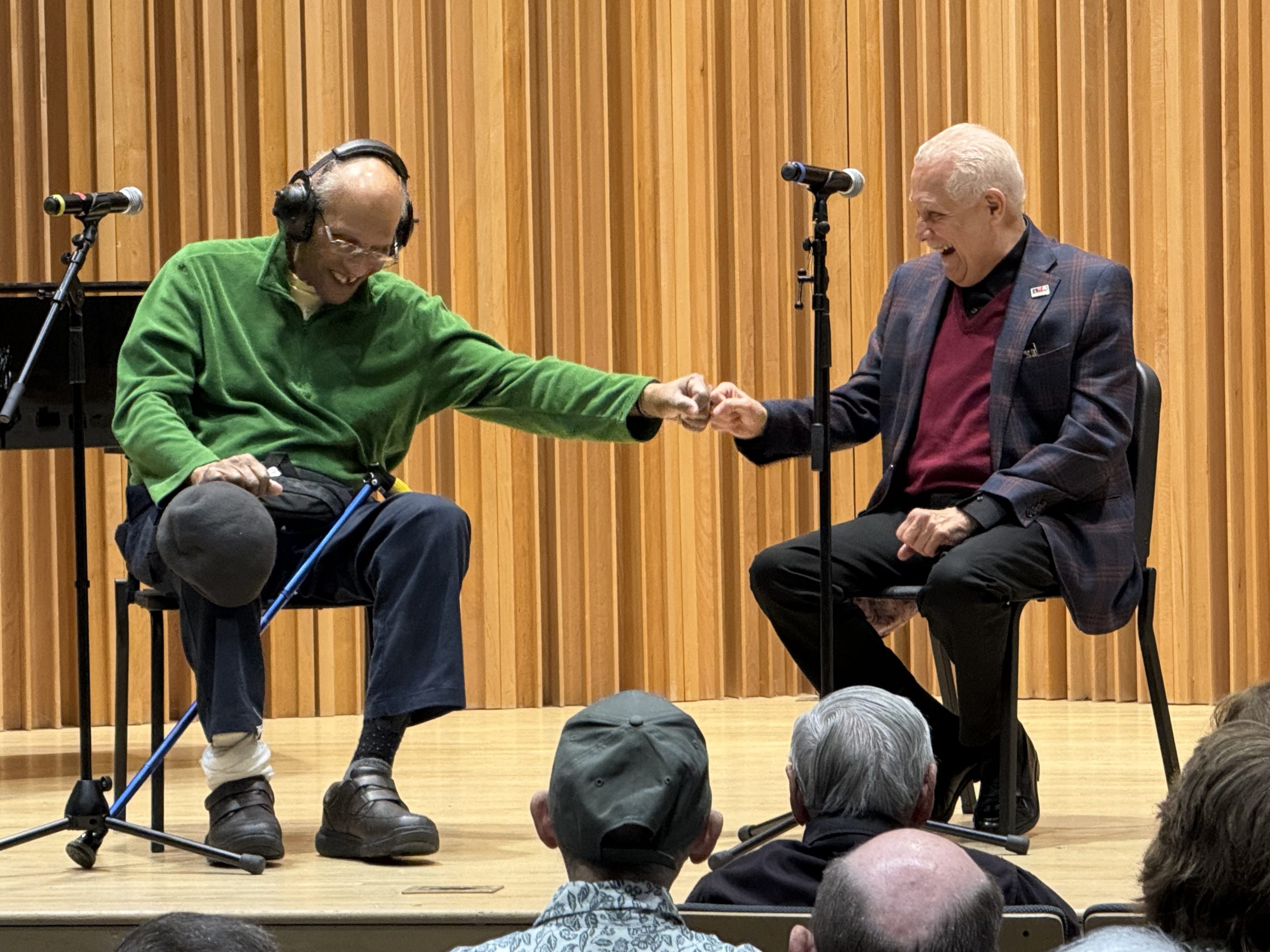
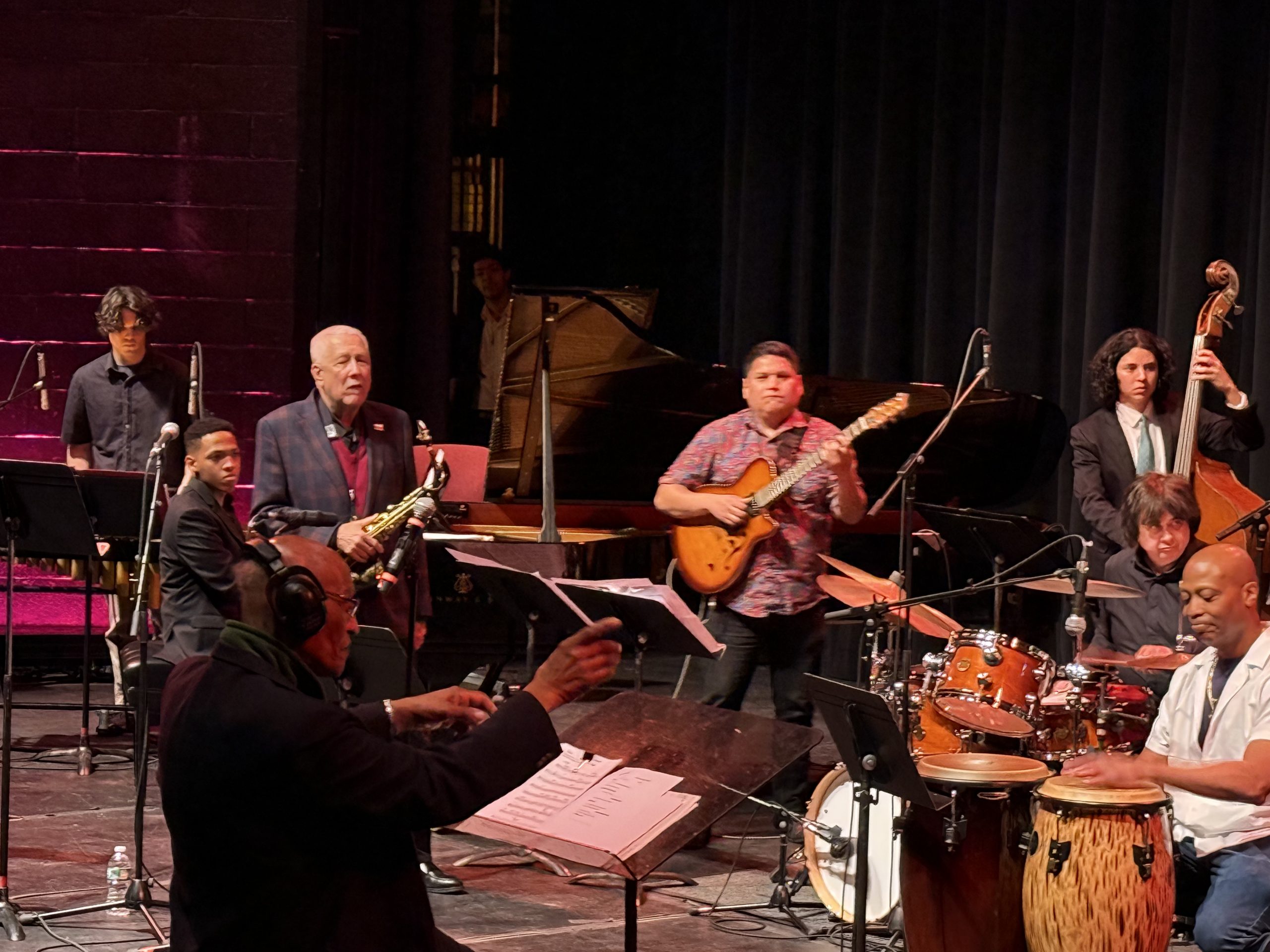
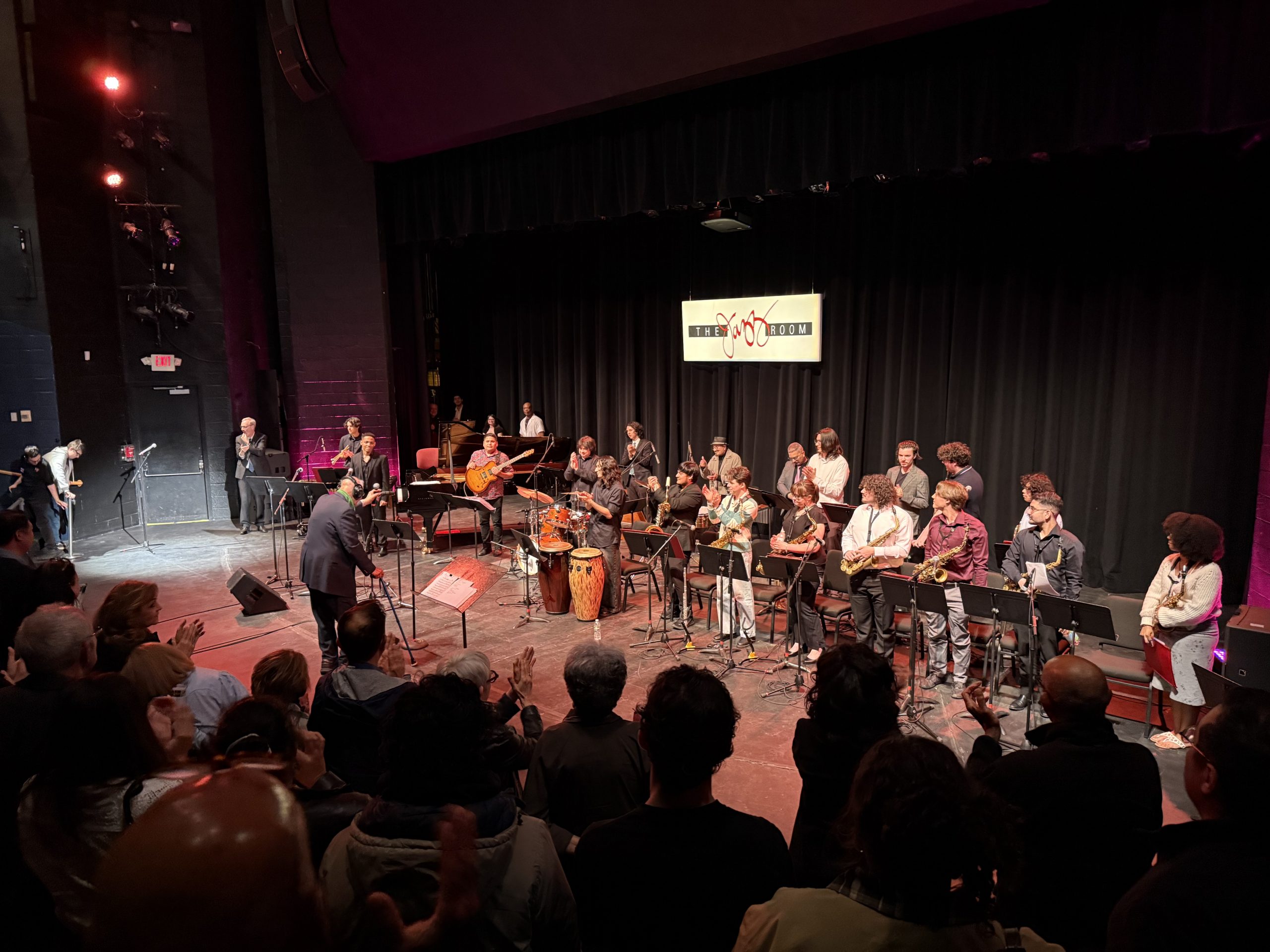
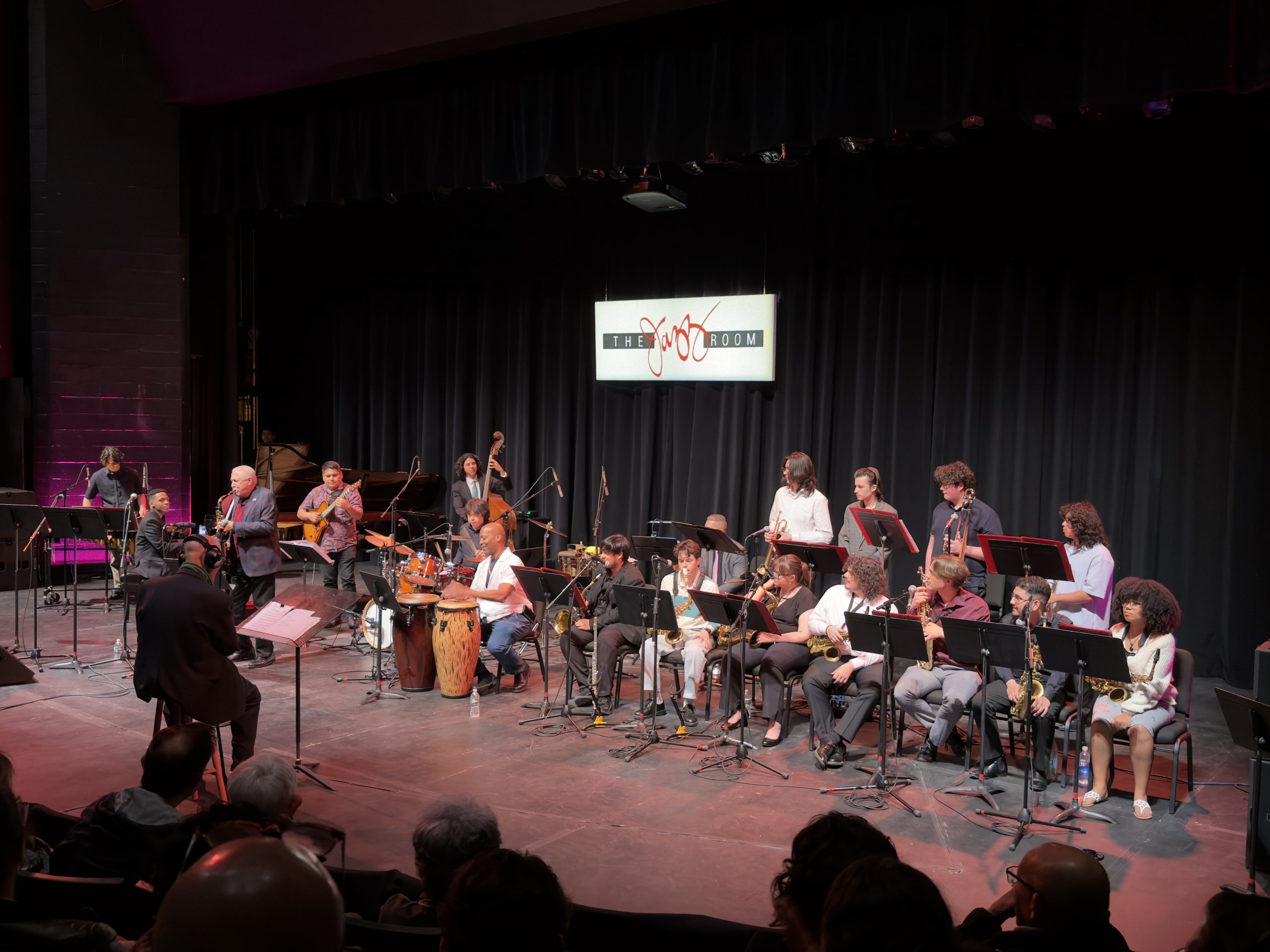
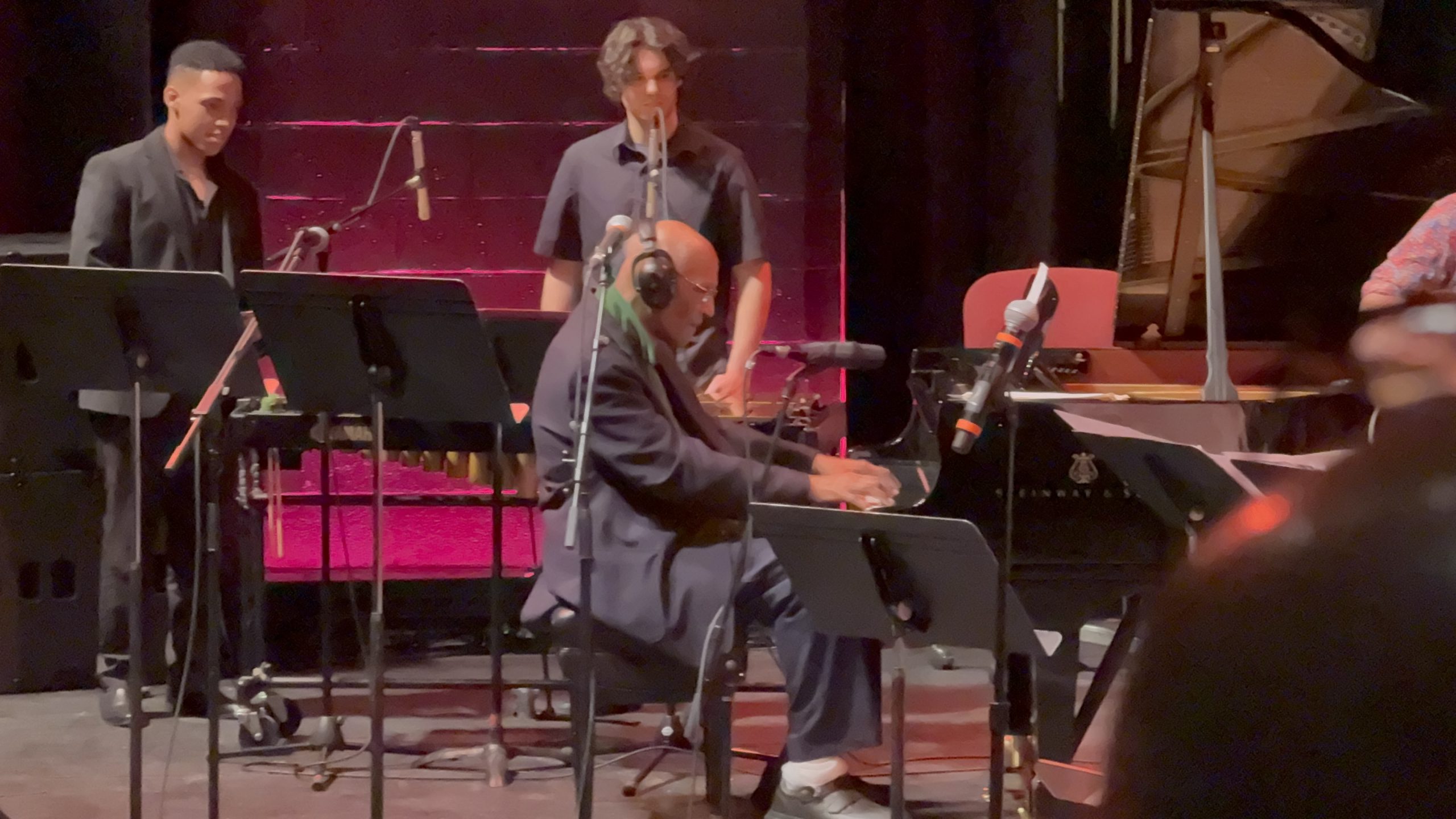
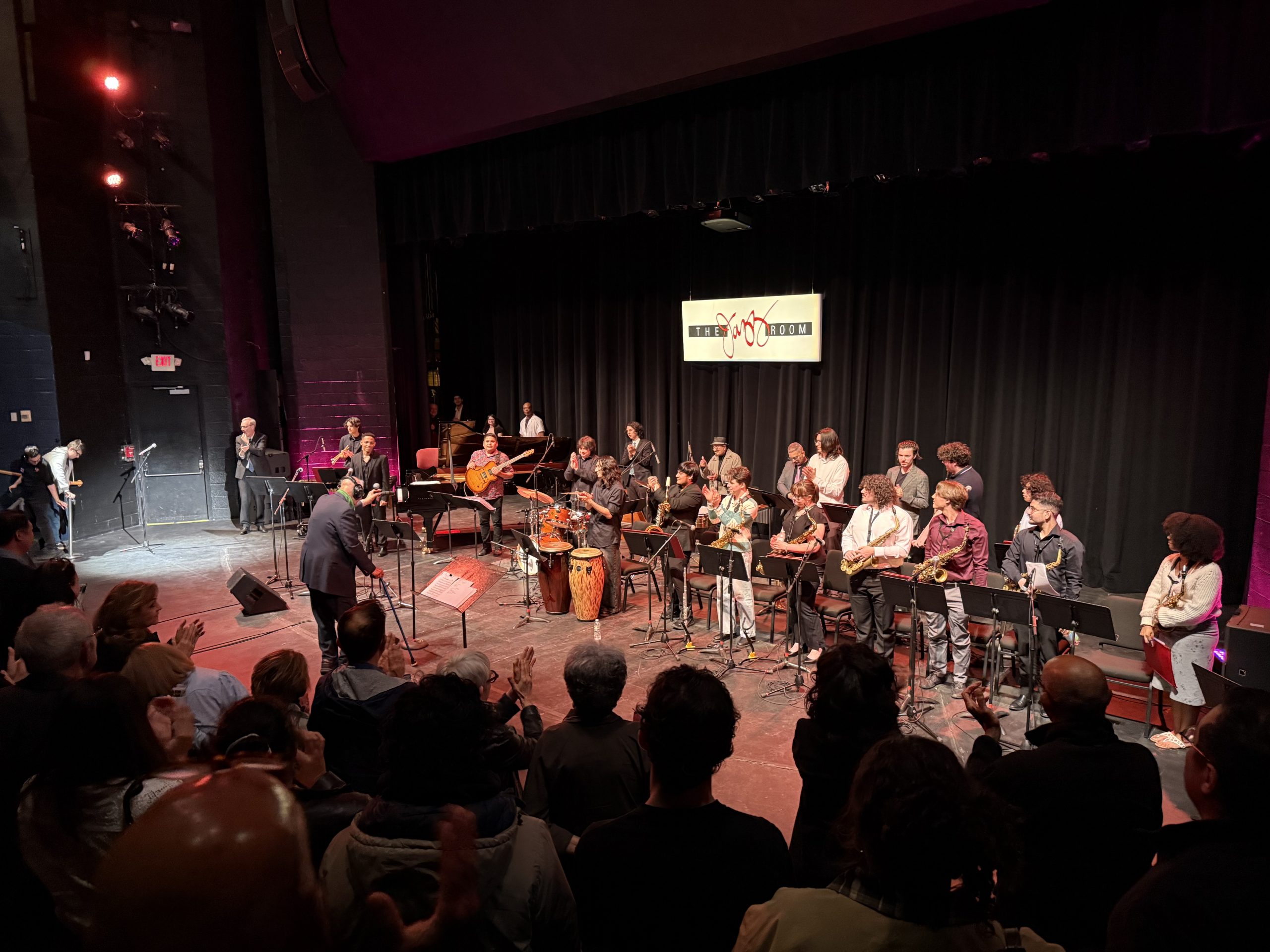
Despite their monumental contributions, society does not build monuments recognizing spectacular humans like Chico Mendoza or Harold Mabern, but it should. I am confident that Chico’s greatness will live on in those quirky kids who played his final William Paterson concert. They did not see a frail 87-year-old professor telling Dad jokes. They witnessed the divine.
No matter how long I live, the greatest honor I will ever receive was on May 3rd, 2026 when Chico Mendoza introduced me to the world as one of his trumpet players.
I love you Chico. Thank you with all my heart.
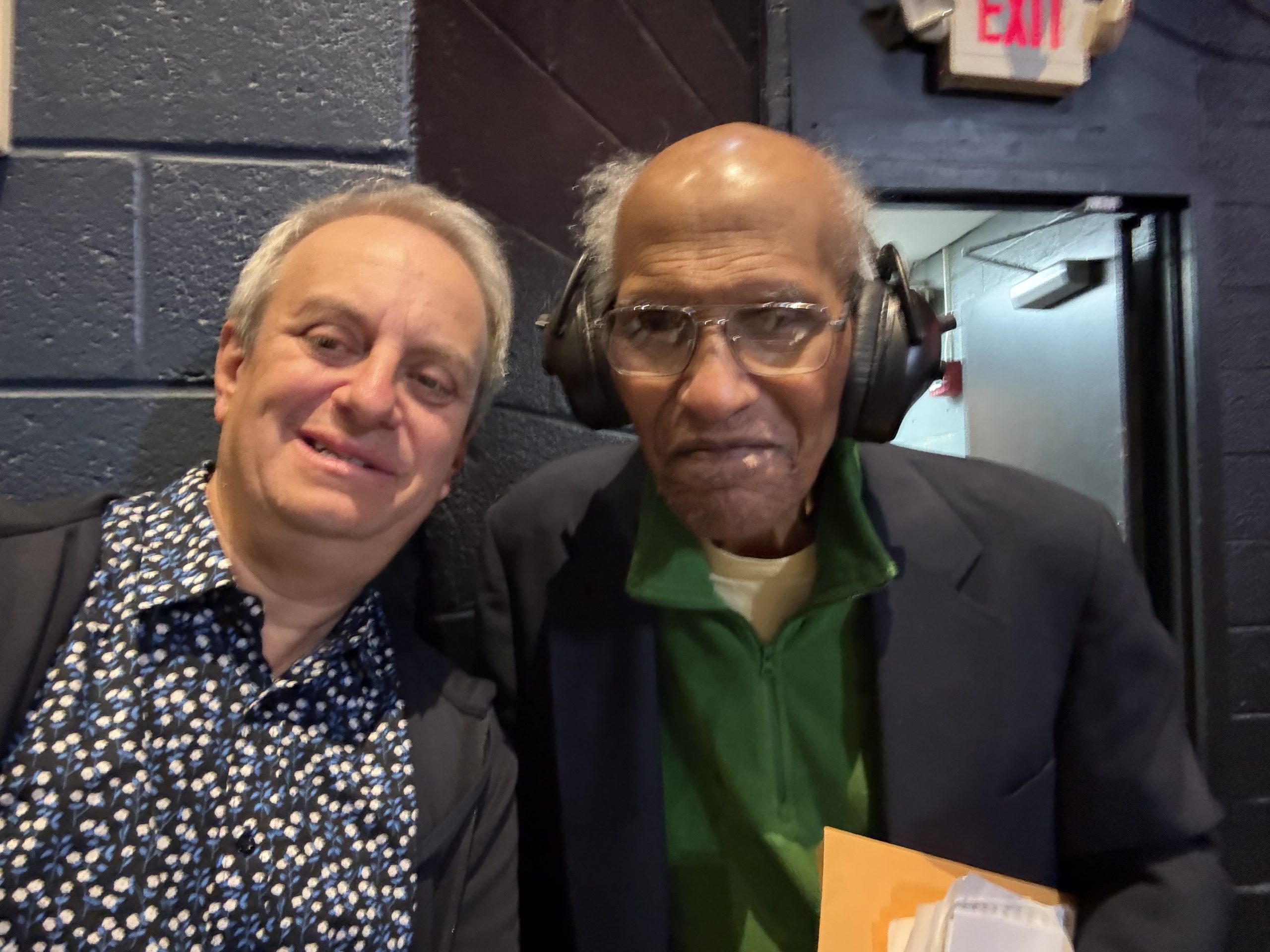
Veteran educator Gary Stager, Ph.D. is the author of Twenty Things to Do with a Computer – Forward 50, co-author of Invent To Learn — Making, Tinkering, and Engineering in the Classroom, publisher at Constructing Modern Knowledge Press, and the founder of the Constructing Modern Knowledge summer institute. He led professional development in the world’s first 1:1 laptop schools thirty years ago and designed one of the oldest online graduate school programs. Gary is also the curator of The Seymour Papert archives at DailyPapert.com. Learn more about Gary here.